
 (excl. BMX)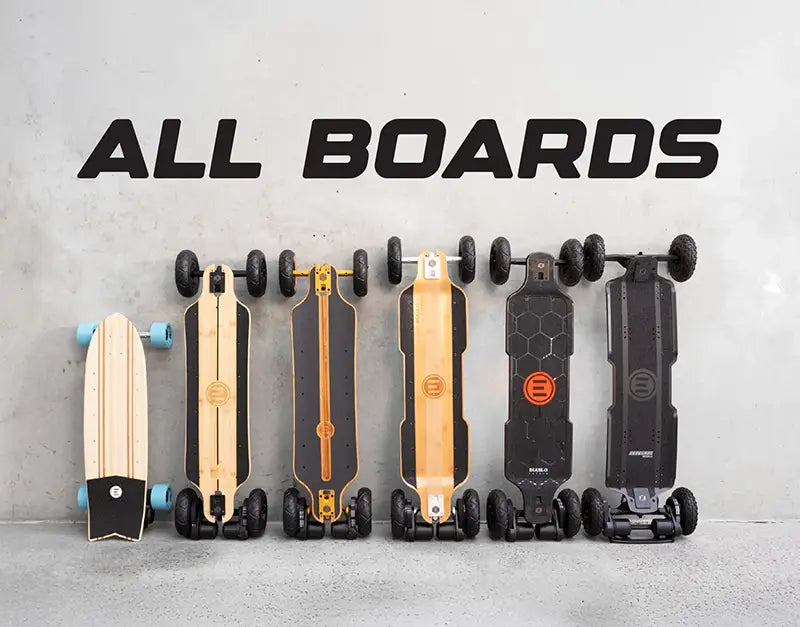
Can an electric skateboard replace a second car?
Can an electric skateboard replace a second car?
For a growing number of people, the answer is yes, at least for the trips that matter most. Not motorway commutes or school runs with three kids, but the daily 5 to 15 kilometre journey that a second car exists almost entirely to cover. The grocery run. The commute to the train station. The ride across town to a friend's place. These are the trips an electric skateboard can genuinely absorb, and the Fusion All Terrain is built to handle them across the kind of mixed surfaces New Zealand streets actually throw at you.
What a second car actually does
Most second cars in a household cover short, predictable distances. Research consistently shows that the majority of urban car trips are under 10 kilometres. The car sits in the driveway for most of the day, costs money to register, insure, fuel and maintain, and gets used for journeys that, if you were honest about it, could be done another way.
That is the gap an electric skateboard fits into. Not as a compromise, but as a genuinely faster and cheaper option for the right rider and the right routes.
Where it works and where it does not
The honest answer is that substitution works best for one or two specific commutes, not every trip a car handles. If you need to carry a surfboard, pick up a flat-pack shelf or transport a passenger, the board stays home.
But for a solo rider covering consistent urban routes, the numbers stack up quickly. Fuel, insurance and registration on a second car can easily exceed $3,000 to $5,000 per year. An electric skateboard costs a fraction of that to run, requires no registration and charges from a standard wall socket for a few cents per session.
The routes that work best tend to share a few characteristics: mostly sealed paths with some imperfect patches, moderate hills, distances under 25 kilometres each way, and somewhere to store a board at the destination. Most New Zealand cities fit that description well enough that it is worth thinking through seriously.
Why terrain matters more than speed
Speed is rarely what holds people back from using an electric skateboard daily. Confidence over varied surfaces is. A board that handles only smooth asphalt will spend half its life parked because real urban routes are not all smooth asphalt.
The Fusion All Terrain runs 175mm pneumatic tyres that absorb rough chip seal, handle gravel sections and roll over the kind of broken footpath edges that would stop a street wheel setup dead. It still reaches 42 km/h, climbs gradients above 35% and carries up to 120 kg, which covers the realistic demands of a daily commuter.
The 648Wh Samsung battery delivers up to 40 kilometres of real-world range on the all terrain setup. That is enough for most daily commutes with margin to spare, and enough to stop range anxiety from becoming a reason to take the car instead.
Riding in New Zealand cities
The terrain case for all terrain wheels is strongest in cities with mixed infrastructure. Auckland's suburban streets vary enormously between smooth new asphalt and chip seal with raised edges. Wellington's hills are real and consistent, and the wind means you want braking control you can trust. Christchurch's flat grid and expanding cycleway network is arguably the most board-friendly city in the country, with long sealed corridors connecting most of the central suburbs.
Hamilton's flat layout suits electric skateboarding well for cross-town commutes, and Queenstown's trails and compressed distances make it worth considering even for a place that sees significant weather variation across the year.
None of these cities are identical, but all of them have routes where a capable all terrain board makes genuine sense as a daily vehicle replacement for the right trips.
What changes when you commit to it
The riders who get the most out of an electric skateboard as a transport tool are the ones who treat it like they would a car: consistent routes, a regular charging habit and a bit of gear planning. A decent backpack, a helmet and appropriate footwear handle most of the practical concerns.
The Evolve Explore app connects to the Fusion and lets you track rides, adjust power modes and monitor battery level. Starting in ECO mode and moving to SPORT once you are comfortable with the board's behaviour is a sensible progression. The Phaze remote gives you clean, intuitive control over acceleration and braking, which matters more than raw speed when you are navigating morning traffic.
Weather is the real variable in New Zealand. The Fusion is not waterproof and should not be ridden in rain. For riders in wetter regions, that means either owning an alternative for wet days or accepting that the board handles a portion of commutes rather than all of them. In Christchurch or parts of Hawke's Bay with drier summer patterns, that limitation matters less. In Wellington in winter, it matters more.
The honest calculation
Replacing a second car entirely is a high bar. A more accurate framing is whether an electric skateboard could let you sell a second car, or delay buying one, by covering enough of what it would do.
For a solo commuter in a flat to moderately hilly city, riding 5 to 20 kilometres each way on mostly sealed terrain, the answer leans toward yes. The Fusion All Terrain handles that use case without compromise: enough range, enough grip, enough power on hills and a deck that is genuinely comfortable over a longer ride.
The 12.5 kg weight means you can carry it into an office, lock it under a desk or take it on public transport when you need to. That flexibility is part of the value proposition that a car cannot match.
At $2,299, the upfront cost is real. But set against even one year of running costs on a second car, the maths tend to close quickly for riders who will actually use it.
Who should seriously consider it
- Solo commuters with a consistent urban route under 20 kilometres each way
- Riders in cities with reasonable cycling and footpath infrastructure
- Households already running one car who want to reduce a second vehicle's load
- Anyone who currently drives short trips out of habit rather than necessity
If that sounds like your situation, the Fusion All Terrain is the board to start with. It handles the terrain variety of real urban riding, gives you genuine range and does not ask you to be a seasoned rider to get value from it on day one.
-
Posted in
electric skateboard, evolve
