
 (excl. BMX)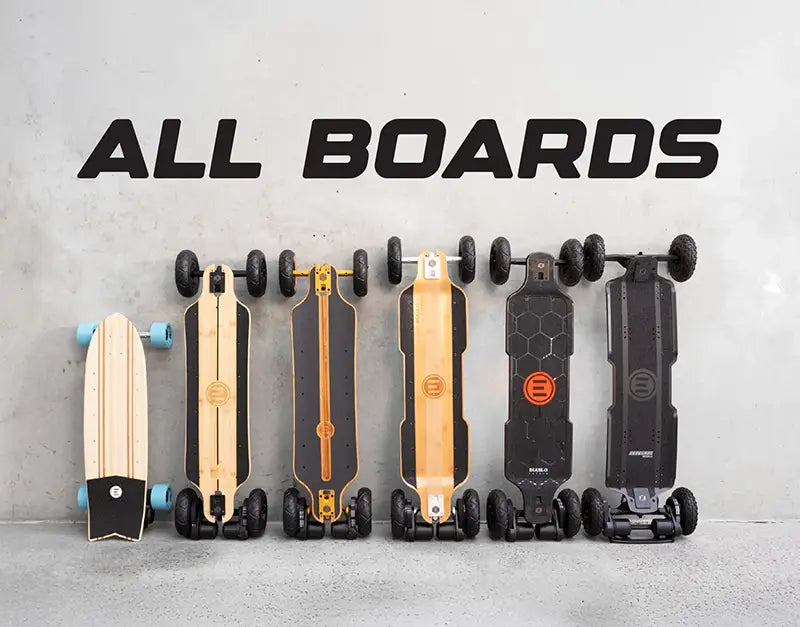
Electric skateboard vs electric bike: which should you buy?

Electric skateboard vs electric bike: which should you buy in New Zealand?
If you want something compact, fun and easy to store, an electric skateboard is the better choice for most New Zealand commuters and recreational riders. If you need to carry cargo, cover very long distances daily or ride on unsealed trails, an electric bike makes more sense. The right answer depends on how you plan to use it.
Both options have genuinely changed the way people get around cities. But they suit different riders, different trips and different lifestyles. This guide breaks down the key differences so you can make a clear decision.
The core difference comes down to use case
An electric bike is closer to a traditional vehicle. It is heavier, larger and designed to replace car trips or handle longer, more demanding routes. An electric skateboard is a personal mobility device that sits somewhere between a traditional skateboard and a scooter. It is faster to grab, easier to carry and more enjoyable to ride for shorter distances.
Neither is objectively better. They solve different problems.
Cost and ongoing expenses
Electric bikes in New Zealand typically start around $1,500 to $2,000 for entry-level models, with quality mid-range options sitting between $3,000 and $5,000. Premium commuter and trail bikes push well beyond that.
A capable electric skateboard like the GTR Bamboo All Terrain starts at $1,899 NZD. It includes dual 3000W motors, a 504Wh battery and everything you need to ride on day one. Ongoing costs are low. There are no registration fees, no chain maintenance and no tyre replacement costs anywhere near what a bike requires.
For riders who want performance without the commitment of a full bike setup, the numbers favour an electric skateboard significantly.
Portability and storage
This is where electric skateboards win clearly. The GTR Bamboo All Terrain weighs 12.1 kg and fits under a desk, in a locker or in the boot of a car without any adjustment. You can carry it on a train, take it into a café and store it in a flat with no dedicated space.
An electric bike weighs anywhere from 18 kg to 30 kg depending on the model. It requires a bike rack, a secure outdoor spot or space in a hallway. In dense cities like Auckland or Wellington, where storage is often limited, that matters more than most people expect.
Riding experience
Electric bikes feel familiar to most people. Pedal assist kicks in and the ride is intuitive from the first minute. They are stable, predictable and accessible to riders of almost any fitness level or experience.
Electric skateboarding has a learning curve. The first few sessions on an e-skate take focus, and riding upright on a board feels different from sitting on a bike. But once it clicks, the experience is hard to match. Carving through a quiet street, flowing downhill or cruising a coastal path on a skateboard has a quality that a bike simply cannot replicate.
The GTR Bamboo All Terrain helps with that transition. The bamboo deck has natural flex that absorbs vibration and feels forgiving underfoot. The 7-inch pneumatic tyres handle rough patches, gravel and grass without drama. Combined with ECO, SPORT and GTR riding modes, new riders can start slow and build confidence before unlocking the full performance.
Range and terrain
A quality electric bike can cover 60 to 100 km on a single charge with pedal assist. If your daily commute is long or your route includes rough unsealed surfaces, that endurance is hard to beat.
The GTR Bamboo All Terrain delivers up to 30 km on all-terrain tyres and up to 50 km on street wheels. For most urban commutes in Auckland, Wellington or Christchurch, that is more than enough. The average daily commute in New Zealand sits under 15 km, so real-world range anxiety is rarely an issue.
For off-road capability, the GTR holds its own surprisingly well. The 7-inch pneumatic tyres handle gravel paths, grass and light dirt tracks. It is not a mountain bike replacement, but it covers the kind of mixed surfaces most riders actually encounter on their daily route.
Where you live matters
New Zealand's cities each present their own riding conditions.
- Auckland has a mix of sealed bike paths and uneven suburban roads. The all-terrain setup handles both confidently.
- Wellington is hilly and compact. The GTR's 25%+ hill climbing capability handles the terrain, and its compact size suits tight inner-city streets.
- Christchurch has flat, well-maintained paths and dedicated cycle routes that suit street riding perfectly.
- Hamilton has a growing network of riverside trails where all-terrain wheels open up more of the city.
- Queenstown is a different story. For serious trail riding, a mountain e-bike is the right tool. But for town riding and getting between spots, the GTR performs well.
Who should buy an electric skateboard
An electric skateboard is the right choice if you:
- Commute under 20 km each way
- Need something you can carry into work, school or public transport
- Want a lower entry price with minimal ongoing costs
- Value a fun, physical riding experience over purely functional transport
- Ride on mostly sealed surfaces with some mixed terrain
Who should buy an electric bike
An electric bike is the better choice if you:
- Commute long distances daily and need consistent range
- Regularly carry bags, groceries or cargo
- Need to ride on rough unsealed trails
- Are not comfortable riding a skateboard and have no interest in learning
- Have a dedicated storage solution
People also ask
Is an electric skateboard cheaper than an electric bike?
Generally, yes. A quality electric skateboard like the GTR Bamboo All Terrain starts at $1,899 NZD, which is below most decent electric bikes. Ongoing maintenance costs are also lower, with no chain, no brake cable replacements and no bike servicing fees.
Can you use an electric skateboard for commuting in New Zealand?
Yes. For commutes under 20 km on mostly sealed roads, an electric skateboard is a practical and enjoyable option. The GTR Bamboo All Terrain covers up to 30 km on all-terrain tyres and 50 km on street wheels, which suits the majority of urban commutes.
Is an electric skateboard harder to learn than riding a bike?
Yes, there is a steeper initial learning curve. Most riders find their balance within a few sessions. Starting in ECO mode on flat ground and gradually building up makes the process much smoother. A flexible bamboo deck and pneumatic tyres help absorb the kind of small surface variations that can unsettle new riders.
Which is safer, an electric skateboard or an electric bike?
Both carry risk if ridden without appropriate protective gear. Electric bikes feel more stable to beginners because of the seating position and wider base. Electric skateboards reward riders who invest time in learning proper stance and braking technique. Helmet, wrist guards and knee pads are strongly recommended for either option.
Final answer
For most New Zealand riders who want a fun, affordable and genuinely portable way to get around, an electric skateboard is the better buy. The GTR Bamboo All Terrain gives you dual-motor performance, all-terrain capability and enough range for everyday riding, all at a price well below a comparable electric bike. If long daily distances or cargo carrying are priorities, a bike makes more sense. But for urban commuting, recreational riding and getting more out of your city, the GTR is hard to argue with.
You can view the GTR Bamboo All Terrain at rideevolve.co.nz.
-
Posted in
electric skateboard, evolve
