
 (excl. BMX)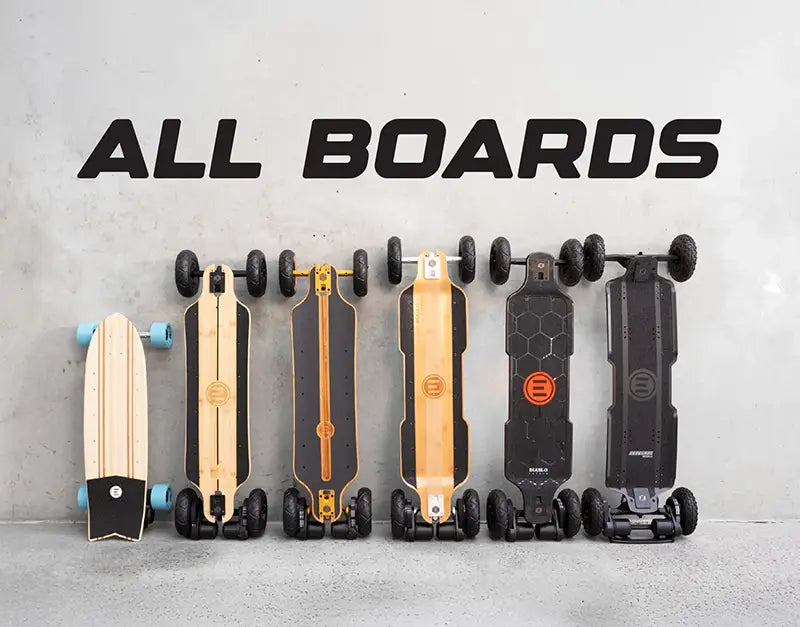
What it really costs to replace your short car trips

What it really costs to replace your short car trips
Most people can tell you what a full tank of petrol costs. Almost nobody can tell you what their five kilometre trip to the shops actually costs, because that number gets buried inside a bigger one. Once you separate it out, short car trips turn out to be some of the most expensive kilometres you drive, and that gap is exactly where an electric skateboard starts to make financial sense.
Short trips cost more per kilometre than long ones
A cold engine uses more fuel per kilometre than a warm one. The first few minutes of any drive are the least efficient, which means a two kilometre trip to pick up groceries burns fuel at a worse rate than the open road drive you did last weekend. Stop-start city traffic in places like central Auckland or Wellington's CBD compounds this further, since idling and braking waste fuel that never gets converted into distance.
Then there is wear. Short trips are hard on a car in ways that rarely show up in the moment. Brake pads wear faster with frequent stopping. Tyres pick up more scrubbing from tight parking manoeuvres. Oil never fully reaches operating temperature on a short run, which accelerates engine wear over time. None of this appears on a single receipt, but it shows up eventually as a service bill or an early tyre replacement.
Add parking. A round trip into most New Zealand city centres carries a parking cost whether you are there for six hours or twenty minutes. For someone making the same short trip most days of the week, that cost repeats far more often than people account for when they think about transport spending.
What an electric skateboard commute actually costs to run
Charging a board is a small and predictable cost. A typical electric skateboard battery holds somewhere between 500Wh and 850Wh depending on the model, and a full charge draws roughly that amount from the wall. At household electricity rates, that is a matter of cents per charge, not dollars. There is no parking fee, no warrant of fitness, no registration and no engine oil to change.
The only real running costs are wear items: wheels, bearings and belts, all of which last a long time under normal commuting use and are inexpensive to replace when they eventually do. Compared with the compounding, invisible costs of short car trips, the maths is not close. The car wins on distance and weather protection. It does not win on cost per short trip.
Where the comparison actually holds up
This only works if the trip fits the board. Most daily short trips, the ones to work, university, the train station or the local shops, sit somewhere between two and ten kilometres. That range is comfortably inside what a well charged electric skateboard covers in a single session, with plenty of buffer left over.
Terrain matters more than distance. A flat run through Hamilton or Christchurch is an easy proposition for almost any electric skateboard on the market. Wellington's hills are a different question. Steeper streets need genuine torque to climb without labouring, which is why dual motor setups in the 3000W-plus range matter more there than they do on flatter ground. Queenstown riders face the same issue in reverse: stunning riding country, but only for a board that can handle real gradient without losing composure on the way down.
Surface matters too. If your short trip stays on footpaths and sealed roads, a street wheel setup is the right tool. If it crosses gravel driveways, unsealed sections or grass verges, all-terrain tyres make the difference between a comfortable ride and an unpleasant one. This is why Evolve builds boards in both configurations, and why some riders end up choosing a two-in-one setup that lets them swap wheels depending on the day rather than committing to one surface type permanently.
The trips worth replacing first
Not every short car trip is a good candidate. A supermarket run with three bags of groceries is still a car trip. But the trips people make purely to move themselves from one place to another, the school run, the commute to a train station, the ride to work or university, are the ones where an electric skateboard genuinely competes. These are trips where you are the only cargo, the distance is modest, and the car's real advantage, weather protection and storage, barely gets used anyway.
Riders across Auckland increasingly use boards for exactly this kind of first and last mile trip, pairing them with train or bus travel rather than replacing the whole commute outright. That combination, rather than an all or nothing swap, is usually where the cost savings show up fastest, because it removes the short, inefficient legs of a journey rather than the whole thing.
A more honest way to measure the trade
The temptation is to compare petrol cost against electricity cost and call it done. That comparison undersells the case for a board and oversells the case for a car, because it ignores wear, parking and the inefficiency built into short journeys specifically. Once you account for those, the short trip is where the car is weakest and where an electric skateboard, ridden sensibly and matched to the terrain, is strongest.
None of this means selling the car. It means being honest about which trips it is actually good for. If your daily short trip is flat, dry and under ten kilometres, there is a strong argument that it is costing you more than it needs to, and that a well chosen electric skateboard would do the same job for less, more often, without you noticing the cost at all.
-
Posted in
electric skateboard, evolve
