
 (excl. BMX)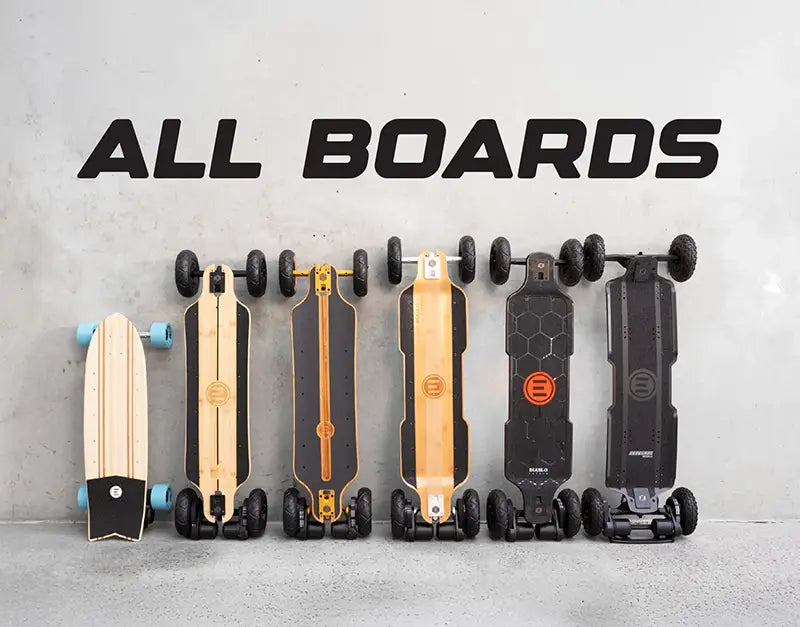
Why electric skateboards use remotes instead of foot control

Why electric skateboards use remotes instead of foot control
Every new rider asks the same question eventually: why do you need a remote at all? The short answer is that foot-based control systems, like the kind used on classic kick scooters or self-balancing boards, do not give you the precision or safety margin that real riding demands. A handheld remote does.
But the longer answer is worth understanding, because it changes how you think about the whole riding experience.
The physics problem with foot control
When you are moving at 40 km/h on an electric skateboard, your feet are doing a lot of work already. They are managing weight distribution through corners, absorbing vibration from the surface, and keeping you balanced over the deck. Asking them to simultaneously modulate throttle and braking is not just inconvenient. It creates a conflict between balance inputs and power inputs that can get you into trouble fast.
Self-balancing boards like hoverboards use foot pressure to accelerate and brake, which works fine at low speeds on flat surfaces. But the moment you introduce hills, road camber, or the kind of tight cornering you get riding through Wellington's waterfront or one of Auckland's hillier suburbs, the system fights against your natural balance responses. Lean to corner, and the board tries to accelerate. Shift your weight back to absorb a bump, and it interprets that as a braking command.
Handheld remotes separate those two jobs completely. Your body handles balance. Your thumb handles power. The result is a more intuitive, more predictable ride.
Braking is the bigger reason
Acceleration is only half the equation. Braking on a fast electric board needs to be precise, immediate and independent of what your body is doing at that moment.
Regenerative braking on modern boards like the Diablo or Fusion feeds energy back into the battery while slowing the board. The control needs to be graduated, not binary. Too aggressive and you get thrown forward. Too soft and you do not slow in time. Foot control systems struggle to deliver that kind of fine modulation under real conditions, especially when your weight is shifting mid-corner or you are navigating a steep descent.
A quality remote gives you a direct, analogue connection to the motor controller. You feel how much braking you are applying, and you can back it off or increase it in an instant without disturbing your stance.
How the Phaze remote handles this
The Phaze Remote Bluetooth is designed around this exact need. The body is CNC aluminium, which means it is rigid and responsive in your hand without being heavy. The dual trigger layout separates throttle from braking physically, so there is no ambiguity about which input you are giving.
There is an LCD screen that shows your ride data in real time. Speed, battery level, riding mode and distance are all visible at a glance without needing to pull out your phone. For longer rides around Christchurch's flat cycling network or the sealed tracks around Hamilton, that kind of feedback keeps you informed without breaking your focus.
The Bluetooth connection pairs with the Evolve Explore app, which is where the real depth of control lives. You can adjust acceleration curves, braking intensity and set your riding mode before you push off. Once you are moving, the remote handles everything you need without pulling out a phone.
Why wireless is safer than wired
Some early electric boards used wired connections between the remote and the board, which created obvious problems if you fell or if the cord got tangled. Bluetooth remotes removed that risk entirely.
The Phaze uses a stable wireless connection that maintains signal even in congested urban environments. Board-to-remote communication is fast enough that there is no perceptible lag between your input and the board's response. On a fast descent through Queenstown's surrounding terrain or when threading through city traffic, that responsiveness matters more than most riders realise until they experience a board with a slower connection.
The fail-safe question
A common concern with wireless remotes is what happens if the connection drops. It is a fair thing to ask. On Evolve boards, a signal dropout triggers a gradual coast-to-stop rather than an immediate motor cut or runaway acceleration. The board does not slam on the brakes, and it does not keep going at full speed. It slows in a controlled way, which gives you time to react.
This is a deliberate safety design, and it is one of the reasons a remote-based system is actually safer in practice than most foot-control alternatives. The fail state is predictable and manageable.
Riding modes and why they matter
Foot control systems generally offer no mode switching. You get whatever power the system delivers based on your inputs. Remote-based boards like everything in the Evolve lineup let you tune the riding experience through modes like ECO, SPORT and CORSA, and dial in custom curves through the app.
For a new rider starting out in Auckland or Wellington, ECO mode through the Phaze gives you a gentle, forgiving throttle that builds confidence without the risk of sudden acceleration. For an experienced rider who wants the full 7000W available on a Diablo, flicking to CORSA delivers it cleanly. The same remote handles both, and the board responds exactly as set.
That flexibility is simply not possible with foot control. There is no equivalent of a riding mode when your body weight is the only input the system reads.
One remote, multiple boards
The Phaze Bluetooth remote is compatible across the current Evolve lineup, including the Diablo Bamboo, Diablo Carbon, Fusion, Stoke X and Renegade Diablo. If you own more than one board, or plan to upgrade in the future, the same remote carries across without relearning the controls.
It is also available as a standalone purchase, which matters if you want a spare or if you are upgrading from an older R2 remote on a GTR Series 1 or Stoke Series 1.
The remote is one of those components that riders do not think much about until they use a poor one. A bad remote with lag, poor ergonomics or an unreliable connection makes every board feel worse than it is. A well-designed remote disappears in your hand and lets you focus entirely on the ride.
-
Posted in
electric skateboard, evolve
