
 (excl. BMX)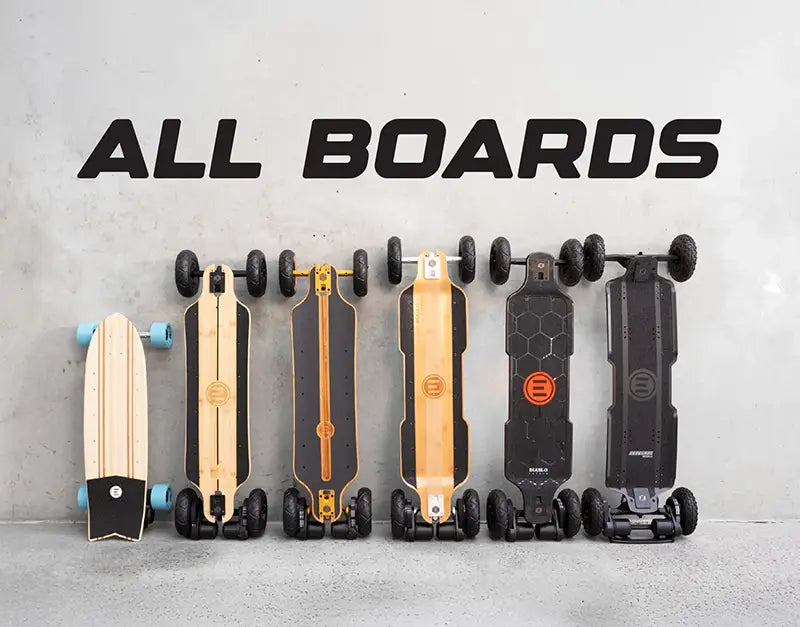
How to replace and tension an electric skateboard drive belt
How to replace and tension an electric skateboard drive belt
A clicking sound under hard braking may indicate a loose belt skipping on the drive gear, though it does not rule out a motor issue or another fault, so it is not something to assume away without a proper check. If it does turn out to be a tension issue, it is something you can check and correct yourself with two basic tools. Understanding how the drivetrain is actually built makes the whole process far less mysterious, and takes the guesswork out of a noise you were not expecting.
What the belt is actually doing
Every belt-driven Evolve board uses the same basic power path at each rear wheel. The motor spins a small pulley, a toothed belt loops that pulley to a larger drive gear sitting on the rear axle, and the drive gear engages the wheel hub through raised lugs on its wheel-facing side, which fit into matching spaces inside the hub. The wheel only turns because the hub is locked to that drive gear through this engagement. The front wheels are not driven at all, they simply roll.
It is worth being precise about this because it is easy to describe incorrectly. The drive gear and the wheel hub are not the same part. The gear sits inside the hub and engages it, rather than being the hub itself. Once you can picture that relationship, tensioning a belt makes more sense, because you are really just adjusting the distance between the motor and that drive gear.
The two symptoms that tell you something is off
A belt that is too tight adds unnecessary friction through the drivetrain and puts more load through components than they need to carry. A belt that is too loose shows up differently: a clicking sound under hard braking, which may be caused by the belt skipping across the teeth of the drive gear rather than gripping it properly. That clicking is the symptom to watch for, not something you need to deliberately test for.
Correct tension sits between those two extremes. The target is approximately 5 mm of play when you press on the belt, combined with a wheel that still spins freely. That is the target across Evolve's belt-driven boards, regardless of which model you are riding.
Tools you actually need
This is a genuinely accessible job. You need a Y-tool, the multi-socket tool that comes with the board, and a 1/8 inch Allen key. Nothing about the process requires specialist equipment. What does vary between models is the exact belt and drive gear fitted, so always use the correct part for your specific board rather than assuming one size covers everything in the range.
Getting the wheel and belt off
Start by removing the rear wheel nut with the Y-tool, turning it anticlockwise, then sliding the wheel off the axle. As the wheel comes free, the hub disengages from the drive gear, but the gear and belt stay in place on the axle and motor pulley.
With the wheel out of the way, undo the two belt cover bolts with the Allen key and lift the cover off. From there, rotate the drive gear while pulling it gently away from the assembly, and it should lift off along with the belt sitting around it.
Fitting a new belt and setting tension
Before touching the belt itself, loosen the four motor mounting bolts by roughly half a turn to a full turn. You are not removing these bolts, just freeing the motor enough to slide within its mounting slots. This is the actual mechanism behind tensioning: moving the motor slightly further from or closer to the drive gear changes how much play sits in the belt.
Fit the new belt around the motor pulley, then place the drive gear back on the axle, seat the belt onto one side of it, and rotate the gear until the belt sits fully onto the teeth. Push the motor away from the gear while feeling the tension in the belt, aiming for that 5 mm mark, then snug up the two accessible motor screws just enough to hold the position.
The most reliable way to check your work is to temporarily refit the wheel. With the wheel on, the drive gear sits straight, which gives a more accurate read on tension than testing it with the wheel off. If it is still too loose, pull the wheel back off, shift the motor slightly further out, and recheck.
Locking everything back down
Once the wheel-on check confirms the tension is correct, remove the wheel again so you can reach the remaining motor screws and tighten all four properly. Before refitting anything, check that both wheel bearings are still sitting where they should be, since the inner bearing can stay on the axle rather than travelling with the wheel.
Refit the belt and drive gear, rotating the gear to seat the belt correctly, then bolt the belt cover back on. Slide the wheel back into place, tighten the wheel nut until it bites, then back it off by about an eighth of a turn. You should still see a thread of the axle showing beyond the nylon locknut.
Spin the wheel by hand and confirm it rotates freely. Follow that with a cautious, low-speed ride to check that the belt does not click or skip under braking before riding normally again.
Evolve has not published a torque figure for the motor screws. If a screw begins to slip in the Allen key rather than turning properly, stop rather than forcing it, and contact Evolve support before continuing.
Street wheels and all-terrain tyres
The belt-drive layout described here applies whether a board is set up with street wheels or all-terrain tyres. The only verified difference between the two setups is rolling resistance: all-terrain tyres create more rolling resistance than street wheels, which comes down to the tyres themselves rather than anything specific to belt tension or wear.
The Diablo Bamboo All-Terrain runs this same belt-drive architecture, with the motor, belt, drive gear and belt cover sitting externally where you can access and inspect them, rather than anything sealed away. That is worth knowing if you are weighing up an all-terrain setup, regardless of which board you eventually choose.
A realistic view of maintenance
None of this is complicated once you have done it once. The tools are minimal and the steps are the same each time: loosen the motor, fit the belt, check tension with the wheel on, then lock everything back down.
If anything about the job feels uncertain once you are into it, particularly around torque or hardware that will not budge, stop and get in touch with Evolve support rather than guessing your way through it.
-
Posted in
electric skateboard, evolve
